AI Chatbots vs Live Chat: Lead Generation Decision Framework
Short answer: there is no universal winner. AI chatbots typically capture more raw contacts because they are available 24/7 and can handle high volume, while properly staffed live chat usually converts a higher share of qualified prospects. Which generates more leads for your business depends on whether you measure success by quantity of captured leads or by qualified leads that convert to sales.
Why This Decision Matters for Lead Generation
Many business owners and marketing teams face the same operational question: where does automation belong in the lead funnel and which tasks should remain human? The wrong choice can create gaps in capture, duplicate work, or poor handoffs to sales. The issue is not just which tool is technologically superior. It is how lead capture, qualification, routing, and follow-up fit together as a system. Solving that requires clear criteria, realistic staffing assumptions, and CRM integration so leads do not fall through the cracks.
Decision Framework: AI Chatbots vs Live Chat
Use this framework to choose between ai chatbots and live chat by matching business goals, use cases, and implementation requirements. If you need help building the automation and integrations behind the decision, review our AI & Automation service for examples of how systems are designed rather than just tools deployed.
Decision criterion | AI chatbot | Live chat | When to choose |
|---|---|---|---|
Primary strength | Scale and availability for initial capture | Complex qualification and persuasion | High traffic or after-hours vs high-touch sales |
Lead quality | Good at collecting contact and basic qualifiers | Better at diagnosing intent and closing appointments | Use bot for filtering, human for final qualification |
Implementation effort | Requires conversation design, training data, routing rules | Requires hiring/training staff and escalation protocols | Lower upfront technology, higher ongoing staffing for live chat |
Measurement | Track capture rate, drop-off points, handoff rate | Track conversion rate to booked meetings or sales | Both need CRM attribution to be meaningful |
Risk | Poorly designed bots frustrate users and lower conversion | Understaffed live chat leads to long waits and lost leads | Test and iterate small before scaling either approach |
Common Use Cases and Recommended Mixes
High-volume, price-sensitive offers: Start with an ai chatbot to collect and pre-qualify leads, then route high-intent leads to sales.
Complex, consultative sales: Prioritize live chat with skilled agents for faster qualification and follow-up.
After-hours capture: Use a chatbot to capture leads and schedule follow-up; handoff to live agents during business hours.
Lead nurturing and appointment booking: Combine a bot for scheduling and an agent for conversion calls or demos.
Implementation Considerations and CRM Integration
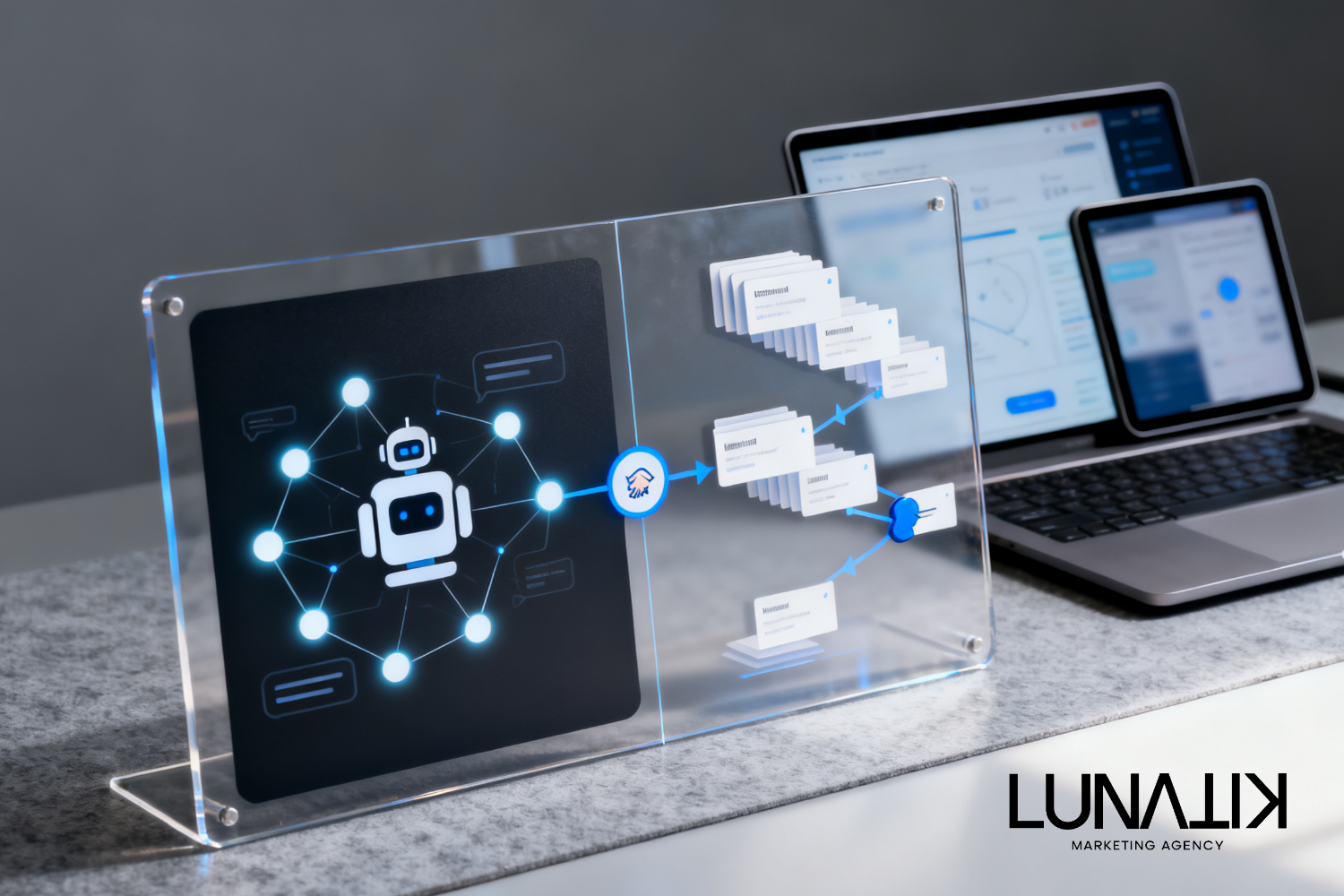
Deciding between ai chatbot and live chat is less a tool choice and more an architecture decision. Plan for these elements before launch: routing rules, escalation triggers, required data fields, CRM mapping, transcription storage, SLA for human follow-up, and reporting. Design the bot to collect the minimal qualifying data that sales needs, and ensure every captured lead has a clear next action in your CRM. If you are building automated handoffs, structure the workflow so that human agents receive context-rich transcripts and a priority flag. For implementation patterns and workflow templates, see our AI Marketing Workflow guidance.
How to Evaluate Performance
Measure both quantity and quality. Useful metrics include captured leads per session, percent of bot-to-human handoffs, lead-to-opportunity conversion rate from each channel, time-to-first-contact by a human, and booked meetings. Use A/B tests to compare scripts, qualification questions, and handoff timing. Most importantly, ensure CRM attribution ties chat interactions to pipeline outcomes so conversion quality is visible.
For a deeper discussion of how AI and automation can fit into an existing marketing stack, read The AI Advantage which outlines durable ways to use automation without sacrificing sales effectiveness.
FAQ
Will an ai chatbot replace my live agents?
No. A chatbot can automate routine screening and off-hours capture, but live agents are usually required for nuanced negotiation, complex product questions, and closing higher-value deals. The most effective approach uses the two together.
Does a chatbot reduce staffing costs?
It can reduce repetitive tasks and after-hours staffing needs, but cost savings depend on call volume, complexity of inquiries, and the cost of maintaining the chatbot. Measure total cost of ownership including training, templates, and integrations.
How do I avoid losing leads when switching between bot and human?
Define clear escalation rules, pass full conversation context to agents, and record a required next action in the CRM when a lead is captured. Test handoffs under realistic workloads before scaling.
Which is better for local businesses versus nationwide businesses?
Both models work across market scopes. Local businesses often benefit from bot-driven appointment booking plus local hours routing. Nationwide businesses benefit from bots handling time-zone coverage and routing to regional sales teams. The same decision framework applies.
Choosing the Right Chat Model for your Funnel
We help businesses evaluate whether an AI chatbot, live chat, or a combined system best fits their goals, then design the CRM handoffs, qualification logic, and measurement framework that prevent leaks between lead capture and sales. At Lunatik Marketing Agency, we focus on creating connected workflows that improve response times, organize lead information, and support a smoother customer journey. If you want a short diagnostic of your current chat-to-CRM flow, Explore AI & Automation to learn more about building a more effective system and get a recommended roadmap.